
You walk over to the thermostat, hoping for a breeze, but you're met with a puff of humid heat instead. Finding your AC blowing warm air in Orlando is more than just a nuisance; it's a direct threat to your home's comfort and your peace of mind. We understand the immediate stress that comes with a failing system. You're likely worried about sweltering indoor temperatures, rising energy bills, and the looming fear of an expensive total system replacement.
It's a common frustration in Central Florida, but with Happy Home HVAC Solutions, you don't have to face it alone. We've seen how our local 90% humidity and frequent electrical storms can push even the best units to their breaking point. In this guide, we'll help you identify exactly why your air conditioner is failing and explain the specific Orlando factors causing the trouble. We'll walk through common mechanical culprits, the impact of the 2026 refrigerant regulations on R-410A systems, and how to restore your cooling quickly so your home feels like a sanctuary again.
Key Takeaways
- Understand how Orlando’s high humidity affects your system and why warm air is a sign of a critical cooling failure.
- Identify the most common culprits for your AC blowing warm air Orlando, including refrigerant leaks and frozen evaporator coils.
- Use our DIY triage steps to check your thermostat and air filter before calling for professional help.
- Learn the risks of running a struggling unit, such as permanent compressor damage and high energy bills.
- Find out how choosing a local, family-owned expert ensures a transparent repair and restores your home’s sanctuary.
Understanding the "Warm Air" Crisis in the Orlando Climate
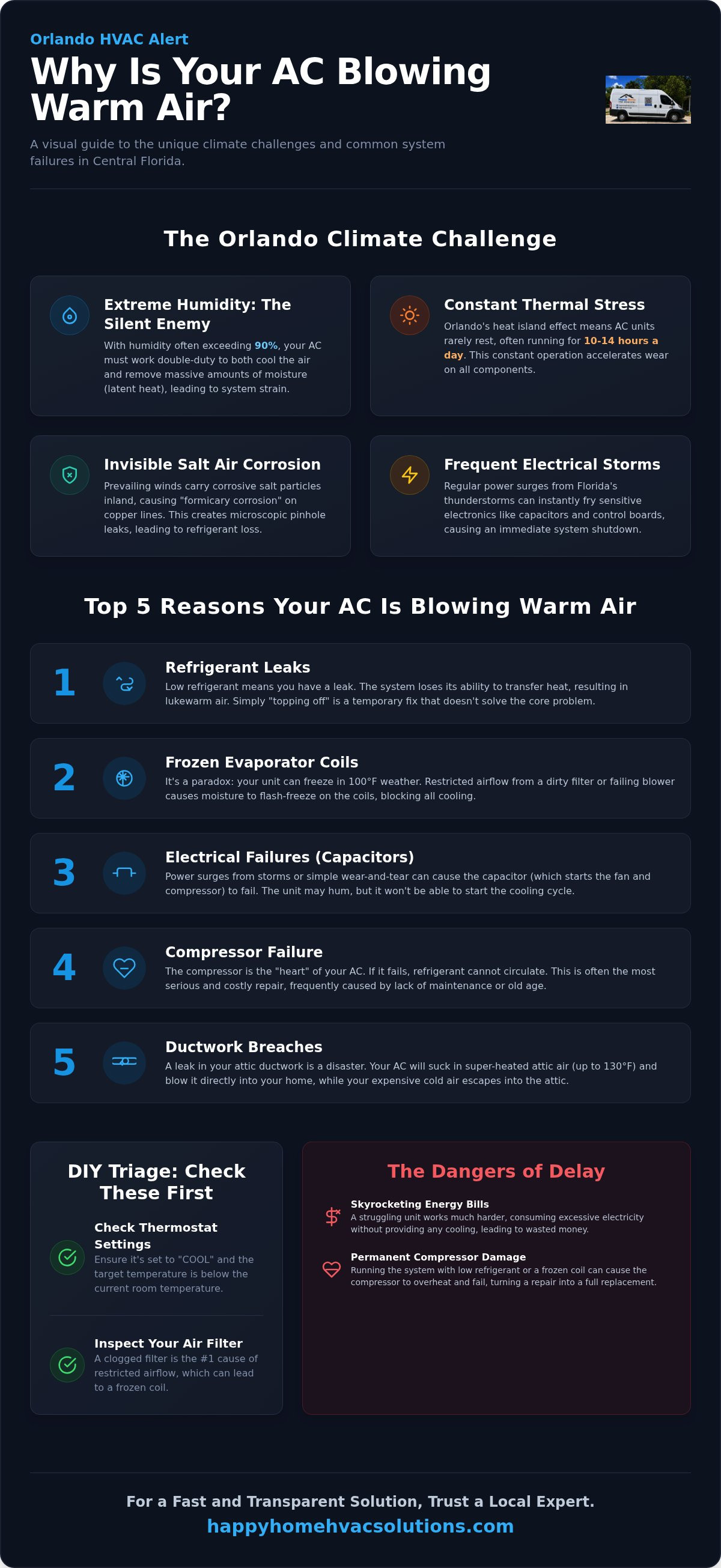
In many parts of the country, an air conditioner is a luxury. In Central Florida, it's a vital part of your home's safety and comfort. When you encounter your AC blowing warm air Orlando heat becomes an immediate problem rather than a minor inconvenience. Our local climate places a unique "thermal stress" on HVAC systems because they rarely get a break. Unlike systems in the North that cycle off frequently, Orlando units often run for 10 to 14 hours a day just to maintain a livable temperature.
Orlando’s inland position also creates a heat island effect. While coastal areas get a sea breeze, our stagnant inland air traps dust, pollen, and pollutants. These particles settle on your outdoor condenser coils, acting like a thick blanket that prevents heat from escaping. This buildup forces the system to work harder, eventually leading to the mechanical exhaustion that results in warm air. Understanding the basics of How Air Conditioners Work helps clarify why this heat exchange is so critical to your comfort.
The Role of Central Florida Humidity
Humidity is the silent enemy of cooling. In Orlando, where humidity levels frequently exceed 90%, your AC has two jobs: lowering the temperature and removing moisture. If the system can't keep up with the moisture, it fails at both. This is due to the struggle with latent heat. Latent heat is the energy stored in airborne water vapor that your AC must remove through condensation to effectively lower the indoor humidity and temperature.
High humidity also creates the "frozen coil" paradox. When the air is thick with moisture, the evaporator coil works overtime to condense it. If airflow is restricted even slightly, that moisture can flash-freeze on the coil. Suddenly, your unit is encased in a block of ice. This ice acts as an insulator, blocking all cooling and leaving you with nothing but warm air blowing through the vents despite the system running at full blast.
Salt Air and Corrosion in Orange County
You don't have to live on the beach to suffer from salt air. Prevailing winds carry microscopic salt particles across the peninsula, reaching deep into Orange County and surrounding areas. These salts settle on the copper lines of your HVAC system, leading to formicary corrosion. This specific type of decay creates tiny, pinhole leaks in the refrigerant lines that are often difficult to spot without professional equipment.
Once a leak starts, your system loses its ability to transfer heat. This is why we always recommend "Florida-rated" coatings for outdoor condensers. These protective layers are designed specifically for our high-salt, high-moisture environment. They help prevent the premature breakdown that often leads to an AC blowing warm air Orlando homeowners dread. Investing in these local protections is the best way to ensure your home remains a cool sanctuary during the hottest months of the year.
The Top 5 Reasons Your AC Is Blowing Warm Air
When your home suddenly feels like a sauna, identifying the culprit is the first step toward restoring your peace of mind. While the Orlando heat is relentless, your system is designed to handle it until a specific component fails. If you're currently dealing with an AC blowing warm air Orlando technicians often find that the issue stems from one of five primary areas.
- Ductwork Breaches: In many Central Florida homes, the AC unit is in the garage and the ducts run through a 130-degree attic. If a seal breaks or a rodent damages a flex duct, your cold air escapes into the attic while hot attic air is sucked into your living space.
- Frozen Evaporator Coils: It sounds counterintuitive, but your unit can freeze in 100-degree weather. This usually happens when airflow is restricted by a dirty filter or a failing blower motor.
- Electrical Failures: Our frequent afternoon thunderstorms cause power surges that can fry sensitive components like capacitors.
- Refrigerant Leaks: Low pressure prevents the heat exchange process, leaving you with lukewarm air.
- Compressor Failure: The "heart" of your system may be struggling to pump refrigerant through the lines due to age or lack of maintenance.
Refrigerant Leaks and Low Pressure
Refrigerant is the lifeblood of your cooling system. Keep in mind that an AC is a closed-loop system; it doesn't "use up" refrigerant like a car uses gas. If your levels are low, you have a leak. Simply adding more is a temporary bandage that ignores the underlying hole. You might hear a faint hissing sound or notice ice forming on the outdoor copper lines. As of 2026, new systems use refrigerants with a global warming potential (GWP) below 700, such as R-454B. While we can still service R-410A units, fixing the leak is essential for both your wallet and the environment.
Mechanical Failure: Capacitors and Compressors
The Orlando sun is brutal on outdoor electrical components. Capacitors, which act like large batteries to help motors start, often fail under extreme heat. You might notice a "hard start" symptom, where the outdoor unit hums or clicks but the fan won't spin. This places immense strain on the compressor. The compressor is the most expensive part of your unit, and protecting it is vital. If your system is blowing warm air, turning it off immediately can prevent a simple capacitor fix from turning into a full compressor replacement. For reliable help, a professional AC repair can diagnose these components before the damage spreads.
DIY AC Triage: What to Check Before Calling a Tech
Before you assume the worst about your system, take a deep breath. It is incredibly stressful when you're dealing with an AC blowing warm air Orlando heat makes everything feel more urgent. However, some common cooling issues don't require a major repair. We always recommend a quick "home triage" to see if a simple adjustment can restore your sanctuary's comfort without a service call.
The first and easiest step is verifying your thermostat settings. Ensure it's set to "Cool" and the temperature is lower than the current room reading. Next, take a look at your circuit breaker. Orlando's frequent electrical storms can trip the breaker for your outdoor condenser unit while the indoor air handler keeps running. If the outdoor unit has no power, the indoor fan will simply circulate uncooled air. You should also walk outside and clear any debris from around the condenser. Florida's high humidity and heavy rains often wash mulch, leaves, or grass clippings against the unit, choking its ability to release heat.
Don't overlook your condensate drain line. Due to our local humidity, these lines often clog with organic growth or algae. Many modern systems have a safety float switch that shuts off the cooling side of your AC if the line backs up, which results in the fan blowing warm air instead of cold. Finally, check your air filter. A dirty filter is the number one cause of airflow-related cooling failures in Central Florida.
Thermostat Troubleshooting
One of the most frequent user errors we see is the "Fan On" versus "Fan Auto" setting. When your thermostat is set to "On," the fan runs continuously, even when the cooling cycle has ended. This pulls humid air back into your home and makes it feel like your AC is failing. Always keep your fan on "Auto" so it only blows when the air is actively being chilled. For those with LG systems, you can use the LG ThinQ integration to monitor your system’s performance and check for error codes directly from your smartphone. If your smart thermostat has a blank screen, it might simply need new batteries or a wiring reset to communicate with the rest of the unit.
Airflow and Filtration Basics
When an air filter is caked with dust and pet hair, it suffocates the system. This lack of airflow is often the culprit behind an AC blowing warm air Orlando residents experience during peak summer months. Without enough air moving over the evaporator coil, the coil can't absorb heat effectively and may eventually freeze over. Once frozen, the ice blocks all cooling. To combat Orlando’s high pollen levels and year-round allergens, we recommend using filters with a MERV rating between 8 and 11. These provide a high level of filtration without putting excessive strain on your blower motor. Replacing your filter every 30 to 60 days is a small step that provides massive peace of mind and protects your system's longevity.
When "Warm Air" Becomes an HVAC Emergency
It’s tempting to leave the system running in hopes that it will eventually "catch up" and start cooling again. However, if you notice your AC blowing warm air Orlando homeowners should know that this is often the final warning before a total system collapse. In our extreme heat index, which frequently pushes feels-like temperatures into the triple digits, a struggling unit is under immense pressure. Trying to "limp" the system along doesn't just keep you uncomfortable; it can actually triple your repair bill by turning a simple component fix into a full system replacement.
While you wait for a technician to arrive, your priority should be your family's safety and your home's integrity. Close all blinds and curtains immediately to block out the intense Florida sun. Use ceiling fans to create a wind-chill effect, but remember that fans cool people, not rooms. If you have vulnerable family members, such as elderly parents or young children, the rising indoor heat can quickly become a medical concern. Moving to a cooler location or a neighbor's home is often the safest choice if the indoor temperature exceeds 85 degrees.
Protecting Your Compressor
The most important action you can take when the air turns warm is to turn the system OFF at the thermostat. Your compressor is designed to pump cool, gaseous refrigerant. When the system isn't functioning correctly, liquid refrigerant can "flood back" into the compressor. Since liquid doesn't compress, this can cause the internal components to shatter instantly. Running a failing AC in Orlando heat is like driving a car without oil, catastrophic failure is imminent. By shutting the unit down, you protect the most expensive part of your HVAC system and ensure the repair remains manageable.
Identifying Urgent Safety Risks
Some warm-air situations are more dangerous than others. If you detect an electrical burning smell or hear a persistent buzzing sound coming from your walls or the outdoor unit, shut off the power at the main breaker. These are signs of a potential fire hazard. Additionally, keep an eye out for water leaks. In many Oviedo homes, the air handler is located in the attic or a closet. A clogged drain line can cause water to overflow, damaging your ceilings, flooring, and drywall. If you see any of these "red flag" symptoms, don't wait for a scheduled appointment. Contact us for a professional AC repair immediately to restore your home's sanctuary and prevent further damage.
Professional Solutions and the Happy Home Advantage
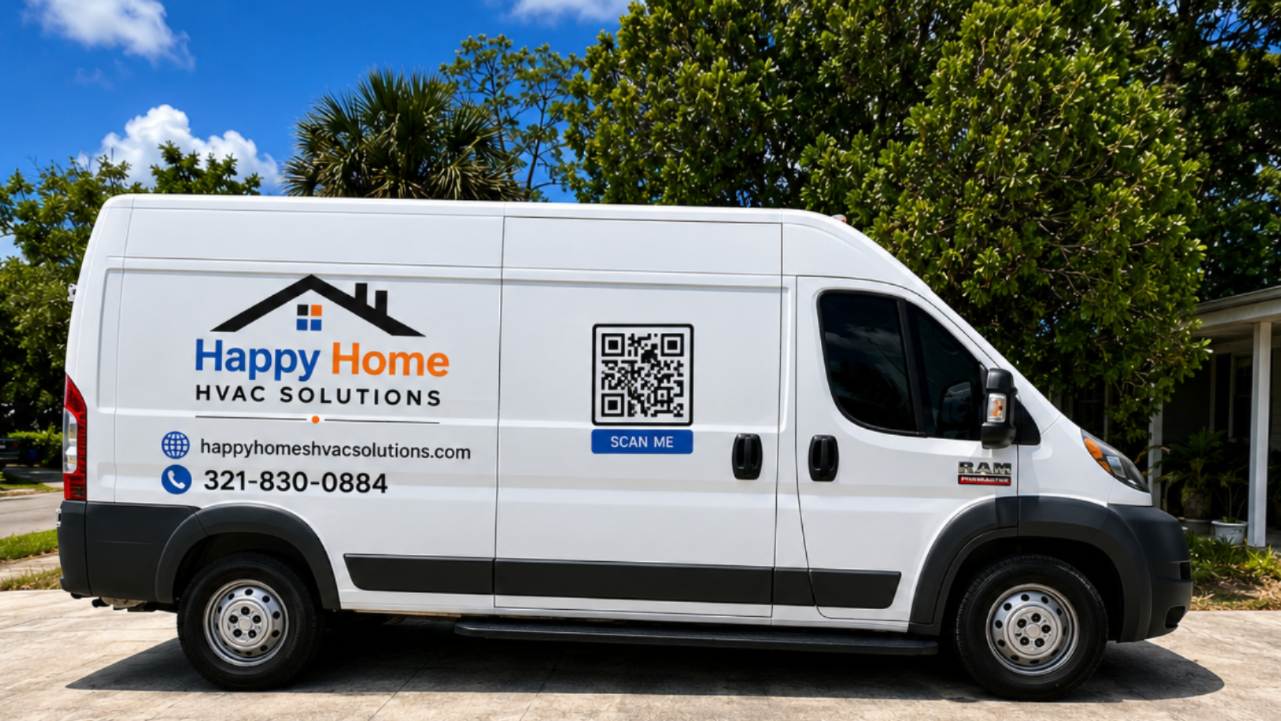
When you're stuck with an AC blowing warm air Orlando heat can make you feel desperate for any solution. It's during these moments that the choice of contractor matters most. While large corporate franchises might prioritize quick sales and high quotas, Happy Home HVAC Solutions operates differently. As a family-owned and operated business, we treat your home like our own. We focus on restoring your sanctuary's comfort through transparent communication and dependable workmanship. Our goal isn't just a mechanical fix; it's providing the peace of mind you deserve.
Choosing a local expert means hiring someone who understands the specific environmental challenges of Central Florida. We know how the 90% humidity and salt-air corrosion affect your components because we live here too. We've built long-term relationships with our neighbors in Orlando and Oviedo by prioritizing honesty over high-pressure tactics. When we arrive for a service call, we provide a clear explanation of the problem and a straightforward path to the solution.
LG Certified Expertise in Central Florida
Modern HVAC technology is becoming increasingly sophisticated. Many newer units use inverter-driven systems that require a high level of technical precision to diagnose and repair. This is where our status as an LG Certified HVAC Contractor provides a distinct advantage. We use advanced diagnostic tools designed for these high-efficiency systems, ensuring we identify the root cause of the failure on the first visit. This expertise allows us to serve residents in Winter Park, Altamonte Springs, and Winter Springs with a level of accuracy that general handymen or uncertified technicians simply cannot match.
Long-Term Protection and Maintenance
The best way to handle an AC blowing warm air Orlando surprise is to prevent it before it happens. Regular maintenance is the key to extending your system's life and keeping your energy bills manageable. However, we also know that sometimes a replacement is the most cost-effective long-term move. To remove the anxiety of future repairs, we offer an industry-leading 12-year warranty on many of our new installations. This guarantee ensures that your investment is protected well into the next decade. If you're ready to restore your home's comfort, Schedule your diagnostic visit with Happy Home today and let our family take care of yours.
Restoring Your Home's Sanctuary
Dealing with an AC blowing warm air Orlando is a stressful experience, but understanding the root cause is the first step toward a cooler home. Whether your system is struggling with Central Florida’s high humidity or a failed capacitor from a recent afternoon storm, remember to turn the unit off to prevent permanent compressor damage. Protecting your home's sanctuary requires more than a quick fix; it requires a partner who understands our local climate and values your peace of mind.
As a family-owned and locally operated team, Happy Home HVAC Solutions is here to provide the transparent, expert service you need. Our LG Certified status ensures precision on every diagnostic call, while our 12-year warranty on many new installations provides a long-term solution to cooling anxiety. You don't have to navigate the sweltering heat alone. We are ready to help you get back to the comfort you deserve.
Restore Your Comfort: Schedule Your Orlando AC Repair Now
We look forward to restoring your comfort and making your home a cool, refreshing sanctuary once again.
Frequently Asked Questions
Is it okay to run my AC if it is blowing warm air?
No, you should not continue running your system if it's failing to cool. Running a unit that is blowing warm air can lead to a catastrophic compressor failure, which is the most expensive component to replace. Turn your system off at the thermostat immediately to protect the mechanical integrity of your unit. This simple step often prevents a minor repair from turning into a full system replacement, saving you significant stress.
How much does it cost to fix an AC blowing warm air in Orlando?
Repair costs vary widely depending on the underlying cause of the failure. Minor fixes like replacing a capacitor or clearing a clogged drain line are generally more affordable than major repairs involving the compressor or evaporator coils. While we don't provide flat pricing online, we focus on transparent estimates. Our technicians provide a clear explanation of the necessary work after a thorough diagnostic visit, ensuring you understand exactly what's needed.
Can a dirty air filter really cause my AC to blow hot air?
Yes, a clogged filter is one of the most frequent reasons for an AC blowing warm air Orlando homeowners encounter. When the filter is dirty, airflow is restricted, which causes the evaporator coil’s temperature to drop too low. This leads to ice formation on the coil. Once frozen, the ice acts as a barrier that prevents the system from cooling the air, resulting in warm air circulating through your vents.
How do I know if my AC is low on refrigerant?
You can often spot low refrigerant levels by looking for specific physical signs. Check the copper lines leading to your outdoor unit for ice buildup or frost. You might also hear a faint hissing or bubbling sound, which indicates a leak in the pressurized system. Since your AC is a closed-loop system, it should never "run out" of refrigerant. If levels are low, a professional must find and seal the leak.
What is the most common cause of AC failure in Central Florida?
Clogged condensate drain lines are arguably the most common issue due to our 90% humidity levels. The constant moisture creates an environment where algae and organic growth thrive, eventually blocking the pipe. Additionally, the frequent afternoon electrical storms in Central Florida lead to a high rate of capacitor failure. These small electrical components often burn out during power surges, preventing your outdoor fan or compressor from starting correctly and leaving you without cooling.
How long should an AC unit last in Orlando’s humidity?
Most air conditioning systems in the Orlando area have a lifespan of approximately 12 to 15 years. The intense heat and humidity place significant "thermal stress" on the equipment, causing parts to wear out faster than they would in milder climates. Regular maintenance can extend this lifespan by an average of three to five years. If your unit is nearing the end of this window, it's often more cost-effective to consider a modern, efficient replacement.
Does Happy Home HVAC Solutions offer emergency weekend repairs?
We prioritize timely service to help restore your home’s sanctuary as quickly as possible. While we don't offer 24/7 emergency dispatch, we understand that a cooling failure in the Florida heat is an urgent matter. We recommend contacting us directly to check our current schedule and weekend availability. Our family-owned team works diligently to provide dependable repairs that fit your needs, ensuring you aren't left sweltering in an uncomfortable home for longer than necessary.
What neighborhoods in Orlando do you provide AC repair for?
Happy Home HVAC Solutions proudly serves several key communities throughout Central Florida. We provide expert AC blowing warm air Orlando repairs and installations in Orlando, Oviedo, Lake Mary, and Winter Springs. Being a locally operated business allows us to reach our neighbors quickly and provide the personalized, neighborly care you expect from a trusted expert guide. If you're located in these areas, our team is ready to help restore your domestic comfort.


