

What if that new sound isn’t coming from the air handler at all? Strange noises from air handler Orlando homeowners notice may seem to come from the ductwork or outdoor unit, making it hard to know whether to keep the system running or call for help. A rattle may have a simple explanation, while buzzing, squealing, or banging can signal a problem that needs attention. It’s understandable to feel unsure, especially when you don’t want a small issue to get worse.
This guide explains how the sound and timing can help you decide what to do next. You’ll learn which observations are safe to make without opening the equipment, what warning signs mean you should switch the system off, and when to arrange professional HVAC service. Whether you’re in Orlando, Oviedo, Winter Springs, Winter Park, or Altamonte Springs, a careful assessment can help identify whether the sound comes from the air handler, ductwork, or another part of the system.
Key Takeaways
- Strange noises from air handler Orlando homeowners hear can offer useful clues, but sound alone can’t confirm the cause or urgency.
- Notice whether a noise is brief or persistent, and whether it’s getting louder or returning during each cycle.
- Record when the sound happens and check for changes in airflow or cooling without opening or dismantling equipment.
- Consider whether the sound may come from the air handler, ductwork, or outdoor unit instead of assuming its source.
- A professional inspection can help identify the source. Ask for a clear explanation of the findings and options before authorizing work.
Strange Air Handler Noises in Orlando: What the Sound Can Tell You
A new sound can be unsettling, but it can’t confirm that a part has failed or show how urgently the system needs attention. The air handler is the indoor equipment that moves conditioned air through your home. It typically contains a blower and other components that support airflow. For a basic overview, see this explanation of an air handler.
In Orlando and nearby Central Florida communities, including Oviedo, Winter Springs, Winter Park, and Altamonte Springs, air conditioning may run regularly to keep a home comfortable. Pay attention to when the sound starts: at start-up, while the blower is running, or as the system shuts down. Note where it seems loudest and whether airflow or cooling has changed. These details can help narrow down where to investigate, but they don’t identify a repair on their own.
Which air-handler sounds should homeowners recognize?
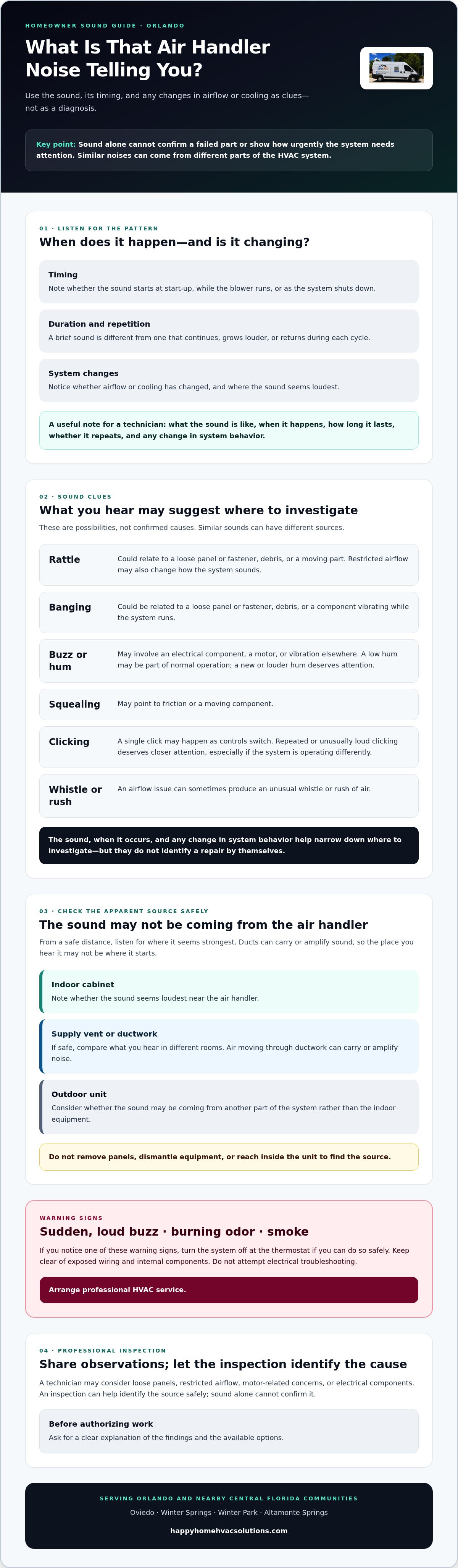
Listen for the character and pattern of the noise, not just its volume. A rattle may come from a loose panel, debris, or a moving part. Buzzing has several possible sources, including an electrical component. A low hum may be part of normal operation, but a new or louder hum deserves attention. Squealing may point to friction, while clicking can happen as controls switch. Repeated or unusual clicks may have another cause. These sounds are clues, not diagnoses.
A brief sound at start-up or shutdown is different from a noise that continues, grows louder, or returns during each cycle. If you’re hearing strange noises from air handler Orlando homeowners commonly ask about, note how long each sound lasts and whether it is changing. A technician may need to inspect the equipment to find the cause.
Is the noise coming from the air handler or somewhere else?
From a safe distance, listen for whether the sound seems strongest near the indoor cabinet, a supply vent, the ducts, or the outdoor unit. Air moving through ductwork can carry or amplify sound, so a noise heard at a register may start elsewhere in the system. If it’s safe, compare what you hear in different rooms, but don’t remove panels or reach inside the equipment.
This can help you describe the issue when arranging service, but it can’t replace an inspection. If the source isn’t clear, share what you noticed rather than trying to identify a failed part yourself.
What Causes Rattling, Buzzing, or Squealing in an Air Handler?
A noise is a clue, not a definitive diagnosis. Similar sounds can come from different parts of an HVAC system, and the same issue may sound different depending on where you hear it. A technician may consider loose panels, restricted airflow, motor-related concerns, or electrical components. The sound, when it occurs, and any change in system behavior all help narrow down where to investigate.
For example, a new rattle that occurs only while the blower runs offers a different clue from a steady buzz accompanied by reduced airflow. The Whole Building Design Guide discusses how equipment selection and duct design can help control disruptive HVAC noise in its guidance on professional HVAC noise standards. At home, the sound still needs to be assessed in the context of the specific system.
What might cause rattling, banging, or clicking?
A rattle or bang could be related to a loose access panel or fastener, debris, or a component vibrating as the system runs. Restricted airflow may also change how the system sounds. These are possibilities, not confirmed causes. A single click as the system starts or stops may coincide with controls switching. Repeated or unusually loud clicking deserves closer attention, particularly if the system is operating differently.
Notice whether the noise repeats, when it occurs in the cycle, and whether cooling or airflow seems different. Don’t remove panels, reach into the unit, or try to secure internal parts while the equipment is operating. A qualified HVAC technician can inspect the system safely and determine whether the sound points to a repair need.
What might cause buzzing, humming, or squealing?
A buzz or hum could involve an electrical component, a motor, or vibration elsewhere in the system. Squealing may be associated with friction or a moving component, while an airflow issue can sometimes produce an unusual whistle or rush of air. None of these sounds identifies a failed part by itself. A technician can check the relevant components and airflow rather than relying on sound alone.
Treat a sudden, loud buzz, a burning odor, or smoke as a warning. If you can do so safely, turn the system off at the thermostat and keep clear of exposed wiring and internal components. Don’t attempt electrical troubleshooting. Arrange professional help to assess the equipment. If the noise persists or worsens, ask about AC repair in Orlando.
When Is an Air Handler Noise Urgent in Orlando?
A short, mild sound isn’t the same as a loud noise that continues, gets worse, or keeps returning. But sound alone can’t prove that the system is safe to run or identify a failed part. Consider what you hear alongside changes in cooling, airflow, or equipment behavior. This can help you choose a prudent next step without trying to diagnose the cause yourself.
| Sound or symptom | Concern level | Prudent next step |
|---|---|---|
| Brief, mild sound at start-up or shutdown, with no noticeable change in operation | Observe; the sound alone doesn’t confirm a problem | Note when it happens and watch for a change or recurrence. |
| New noise that persists, worsens, or recurs during operation | Needs attention, especially if airflow or cooling changes | Contact a qualified HVAC professional for advice and assessment. |
| Loud banging, buzzing, or squealing, or a noise that escalates | Concerning; the source and risk aren’t clear from sound alone | Consider switching the system off and arrange professional guidance. |
| Smoke, a burning odor, visible damage, or abnormal heat | Immediate warning sign | Stop using the system. Keep clear of the equipment and seek appropriate help. |
Which warning signs mean you should stop using the system?
Smoke or a burning smell calls for caution. If you notice either, stop operating the system if you can do so safely. Visible damage or unusual heat around the equipment also means you should keep your distance and arrange professional help. Don’t touch wiring, moving parts, or hot surfaces, and don’t open the cabinet to investigate. If smoke is present or you suspect an immediate hazard, move away and contact appropriate emergency services.
Can you keep running an air handler that makes noise?
It depends on the sound’s severity and whether other symptoms appear. A mild, brief noise without an obvious change in performance may be less concerning than a loud, persistent, or worsening one, but that doesn’t confirm the system is safe. Switch it off if the sound escalates or cooling or airflow changes noticeably. Avoid restarting it repeatedly to see whether the noise goes away.
If you’re unsure what to do about strange noises from air handler Orlando homes can experience, describe the sound, when it occurs, and any change in performance when you seek professional advice. A qualified technician can inspect the equipment and help identify the source before recommending next steps.
What Orlando Homeowners Can Check Before Calling About Air Handler Noise
A few careful observations can help you describe the problem without trying to diagnose or repair the equipment. If you notice smoke, a burning odor, or another immediate hazard, stop using the system if you can do so safely and don’t approach the equipment to investigate. Otherwise, use this checklist from a safe distance:
- Check the thermostat setting and note any warning or message on its display.
- Make sure supply and return vents aren’t blocked by furniture, rugs, or other items.
- Notice whether airflow or cooling feels different from usual.
- Listen for where the noise seems loudest: near the indoor unit, a vent, ductwork, or outdoors.
These checks can give a technician useful context. They can’t confirm the source of strange noises from air handler Orlando homeowners hear, so don’t treat an observation as a diagnosis.
How to document the sound safely
Note whether the noise starts as the system turns on, continues while it runs, or occurs during shutdown. If there’s no sign of an immediate hazard, record a short audio or video from a safe distance. Don’t move closer for a clearer recording. Write down any odor, airflow change, thermostat warning, or recent change in system operation. A clear description can make the initial conversation more useful.
Which checks should homeowners avoid?
Keep your observations external. Don’t open the air-handler cabinet, handle internal electrical components, reach near the blower, or try to lubricate or adjust parts. If you choose to check the filter, follow the equipment instructions and access it only as directed. Don’t force a panel or cover open. Stop if access isn’t straightforward.
Once you’ve noted the sound and checked the thermostat and vents, contact a qualified HVAC professional if the noise persists, worsens, or comes with a change in performance. Happy Home HVAC Solutions is a family-owned, licensed HVAC company serving Orlando and nearby Central Florida communities, including Oviedo, Winter Springs, Winter Park, and Altamonte Springs. Contact Happy Home HVAC Solutions about AC repair to discuss the noise and ask about service availability for your location.
Choosing Air Handler Repair in Orlando: What to Expect from a Professional
A professional assessment looks beyond the sound itself. A technician can inspect the air handler and relevant airflow or control components, then consider how the equipment behaves while running. The goal is to identify the likely source before recommending work, rather than treating a sound description as proof that a particular part has failed.
For strange noises from air handler Orlando homeowners notice, share your observations and ask the technician to explain what they checked and found. You should have a chance to understand the options and any relevant limitations before deciding whether to authorize a repair.
How can you compare repair recommendations?
Ask practical questions: What was inspected? What did the inspection show? How does that finding relate to the noise? A useful recommendation connects the observed condition to the proposed work in language you can follow. If there are options, ask what each one addresses and whether there are limitations to consider. Review the explanation before approving work.
An online list of possible causes can help you describe a sound, but it can’t establish what’s happening in your equipment. Similar noises may have different sources, so compare recommendations based on the inspection and explanation, not on a sound match alone.
What information should you share when requesting Orlando service?
When you contact an HVAC provider, describe the sound in everyday terms and say when it occurs, such as at start-up, during operation, or as the system shuts down. Mention whether cooling or airflow has changed, along with any other relevant observations. If the model information is easy to read from an accessible label, you can provide it. Don’t open the cabinet or move equipment to find it.
Happy Home HVAC Solutions is a family-owned, licensed HVAC provider serving Orlando and nearby Central Florida communities, including Oviedo, Winter Springs, Winter Park, and Altamonte Springs. If you’re in a nearby area, you can also read about AC repair in Winter Park. Confirm current service availability for your specific location when you reach out.
To discuss what you’ve noticed, ask Happy Home HVAC Solutions about AC service. A careful discussion can help clarify the appropriate next step without assuming the cause before the system is assessed.
Take the Next Step Toward a Quieter, More Comfortable Home
Strange noises from air handler Orlando homeowners hear can offer clues, but sound alone can’t confirm what’s wrong or how urgent it is. Notice when and where the noise occurs, along with any changes in cooling or airflow. These observations can help a technician decide what to inspect. Smoke or a burning odor calls for stopping the system if it’s safe to do so.
For persistent, worsening, or concerning sounds, a professional assessment can help identify the source before repair options are discussed. Happy Home HVAC Solutions is a family-owned, licensed HVAC company serving Orlando and nearby Central Florida communities, including Oviedo, Winter Springs, Winter Park, and Altamonte Springs. Ask about service availability for your location.
Contact Happy Home HVAC Solutions to discuss your air handler noise. Share what you’ve noticed so the appropriate next step can be considered after a careful assessment.
Frequently Asked Questions
Why is my air handler making a rattling noise?
A rattling noise may come from a loose panel or fastener, debris, or a component vibrating during operation. Restricted airflow or another system issue can also affect the sound. These are possibilities, not a diagnosis. Note whether the rattle happens at start-up, continues while the system runs, or is getting louder. Don’t open the cabinet or reach inside. Arrange an inspection if the noise persists or worsens.
Is a buzzing air handler dangerous?
A buzz doesn’t automatically mean there’s an immediate hazard, but it can have several possible sources, including electrical components or a motor. Treat a sudden, loud buzz, especially with a burning odor, smoke, visible damage, or unusual heat, as a warning. Stop using the system if you can do so safely, stay clear of wiring and internal parts, and contact a qualified HVAC professional for guidance.
Can I run my AC if the air handler is making a strange noise?
Whether to keep running it depends on the noise, its severity, and whether the system is behaving differently. A brief, mild sound without other noticeable changes may be less concerning, but it doesn’t prove the equipment is safe. Turn the system off if the noise grows louder or cooling or airflow changes noticeably. Avoid repeated restart attempts, and seek professional advice if the noise persists.
What does a squealing noise from an air handler mean?
Squealing may point to friction involving a moving component, but the sound alone can’t confirm the cause. A motor-related issue or another mechanical problem could produce a similar noise. Notice when the squeal occurs and whether it continues or worsens, but don’t try to lubricate, adjust, or reach inside the equipment. If it’s persistent or accompanied by a change in performance, ask a qualified technician to inspect the system.
How do I know if the noise is coming from my air handler or ductwork?
Listen from a safe distance to see whether the sound seems strongest at the indoor cabinet, a supply vent, the ducts, or the outdoor unit. Airflow noise can travel through ductwork and registers, so the loudest point isn’t always where the sound starts. Note what you hear and where, but treat this as an observation, not a definite diagnosis. A professional inspection can help identify the source.
When should I call an HVAC technician for a noisy air handler in Orlando?
Contact a qualified HVAC technician if the noise is persistent, worsening, newly recurring, or accompanied by reduced cooling or airflow. Stop using the system if you notice smoke, a burning odor, visible damage, or unusual heat, provided you can switch it off safely. For strange noises from air handler Orlando homeowners are concerned about, record when the sound occurs and share those details. Confirm service availability for your location in Orlando, Oviedo, Winter Springs, Winter Park, or Altamonte Springs.
Can a dirty air filter make an air handler noisy?
A dirty air filter can restrict airflow, which may contribute to unusual airflow sounds or reduced cooling. Check the filter only as directed in your system’s instructions, and don’t force open an access panel. If the filter looks dirty, follow the equipment guidance for replacement. If the noise continues afterward, or cooling and airflow remain different, arrange a professional assessment rather than assuming the filter was the only cause.


