

In Central Florida, mini-split comfort depends less on choosing the biggest unit than on getting the room-by-room design right. That’s why mini split installation Central Florida homeowners consider should start with the space, not just a model number. A system that’s poorly sized or placed may struggle to keep a room evenly cool and comfortable through hot, humid weather.
If you’re weighing ductless cooling, you may be wondering whether zoning will solve a hot-room problem, how well a mini split can manage humidity, and what installation will involve inside your home. Start by identifying which rooms feel uncomfortable, when the problem occurs, and what you want the system to improve.
This guide explains when a mini split may suit your home, what a professional installation should account for, and how to compare contractors. You’ll learn what to ask about sizing, indoor-unit placement, installation steps, and written proposals. The same questions can help homeowners in Orlando, Oviedo, Winter Springs, Winter Park, and Altamonte Springs understand their options and discuss local availability.
Key Takeaways
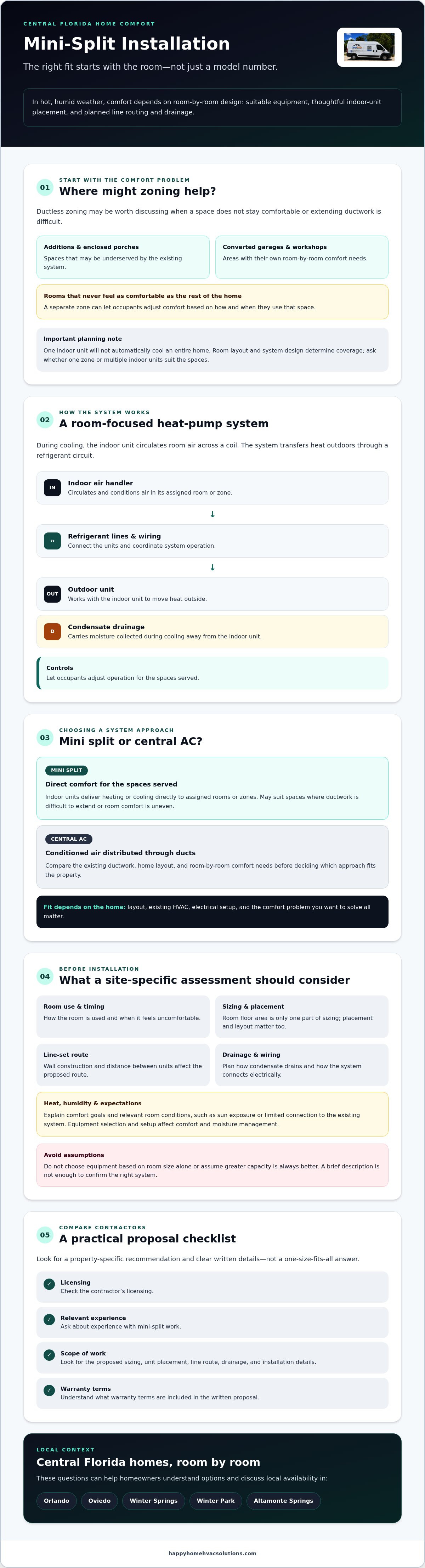
- Consider where ductless zoning may help, such as additions, converted garages, and rooms that never feel as comfortable as the rest of the home.
- Understand the main system components and why planning for line routing, drainage, and unit placement matters.
- Compare mini splits with central AC based on your home’s layout, ductwork, and room-by-room comfort needs.
- Know what to expect from a site-specific assessment and what details to look for in a written installation proposal.
- Use a practical checklist to evaluate licensing, relevant experience, scope of work, and warranty terms for mini split installation Central Florida.
Is Mini Split Installation in Central Florida Right for Your Home?
A mini split is a ductless heat-pump system with an outdoor unit and one or more indoor units connected by refrigerant lines. Unlike central AC, which moves conditioned air through ducts, a mini split delivers heating or cooling directly to the spaces served by its indoor units. The underlying technology is shared with other heat pumps; for a general overview, see how heat pumps work.
This room-focused approach can be useful when extending ductwork is difficult or when certain areas don’t stay comfortable. But a mini split isn’t automatically the right fit for every home. Suitability depends on the property’s layout, existing HVAC system, electrical setup, and the problem you want to solve. A site assessment can help determine whether ductless zoning makes sense and what configuration could serve the space.
Which Central Florida homes may benefit from ductless zoning?
Additions, enclosed porches, converted garages, workshops, and rooms underserved by existing ducts are common situations to discuss with an installer. A separate zone can let household members adjust comfort in a space based on how and when they use it, rather than relying only on the settings for the main living area.
One indoor unit won’t automatically cool an entire home. Its coverage depends on the room layout and system design. If several rooms need attention, ask the installer to assess whether one zone or multiple indoor units are appropriate instead of assuming a single unit will solve every comfort issue.
What should homeowners know about heat and humidity?
Central Florida’s hot, humid conditions make temperature control and moisture management important considerations. A mini split’s performance depends on selecting suitable equipment and setting it up and operating it appropriately for the space. A system that isn’t matched to the room or household’s needs may not deliver the comfort you expect. Don’t choose equipment based on room size alone or assume greater capacity is always better.
During an assessment, explain how the room is used, when it feels uncomfortable, and whether features such as sun exposure or limited connection to the home’s existing system may affect its cooling needs. The installer can evaluate the space and describe what a ductless system may realistically address. A brief description alone isn’t enough to confirm the right system.
For mini split installation Central Florida homeowners should seek a property-specific recommendation, not a one-size-fits-all answer. A careful review of the home, current equipment, electrical setup, and comfort goals helps set clear expectations before installation begins.
How a Mini Split Works and What Florida Installation Must Get Right
A mini split transfers heat rather than creating cool air like a fan. During cooling, the indoor air handler circulates room air across a coil while the outdoor unit helps move heat outside. Refrigerant lines connect the units; electrical wiring powers and coordinates their operation, and a separate drain route carries away condensation. The exact arrangement depends on the equipment model and the home.
Mini-split system at a glance
- Indoor air handler: Circulates and conditions air in its assigned room or zone.
- Outdoor unit: Works with the indoor unit to transfer heat.
- Refrigerant lines and wiring: Connect and coordinate the system components.
- Condensate drainage: Routes moisture collected during cooling away from the indoor unit.
- Controls: Let occupants adjust operation for the spaces served.
How do the indoor and outdoor units work together?
In cooling mode, the indoor coil absorbs heat from room air, and the system moves that heat outdoors through the refrigerant circuit. Many ductless systems use inverter-driven operation, which can adjust output to meet changing demand instead of relying only on repeated full-capacity starts and stops. Performance varies by equipment and installation, so compare model documentation rather than assuming every system works identically.
The line set, wiring, and drain need a planned route through the home and must be installed according to the equipment’s requirements. Wall construction, distance between units, and the indoor unit’s location all affect the installation details. Ask the contractor to explain the proposed route and any visible changes it may require.
Why do sizing, placement, and drainage matter in Florida?
Floor area is only one part of sizing. An installer should consider room dimensions, windows, insulation, how many people use the space, and how much sun it receives. A sun-exposed room with large windows may behave differently from a shaded room of similar size. Matching capacity to the space matters in Central Florida’s hot, humid conditions because cooling demand and moisture removal depend on suitable sizing, setup, and operation.
Placement matters, too. The indoor unit needs to distribute air effectively for the room’s layout and use. Discuss furniture, doorways, and where people spend time so the proposed position makes practical sense. Ask why the selected location is preferable to other possible locations.
Condensate needs a reliable route away from the indoor unit. Ask how the installer plans the drain path and how drainage will be checked before the work is complete. Poor planning can create avoidable moisture concerns. A careful mini split installation Central Florida assessment should explain capacity, airflow, line routing, and drainage in terms of your property. Ask the installer to walk you through those choices before work begins.
Mini Split vs. Central AC: Which Fits Your Central Florida Property?
Neither ductless mini splits nor central AC are right for every home. The better fit depends on which spaces need cooling, whether existing ducts can serve them effectively, and whether you’re addressing one problem room or planning for whole-home comfort. A ductless system’s performance still depends on suitable equipment, thoughtful placement, and careful installation.
| Consideration | Ductless mini split | Central AC |
|---|---|---|
| Zoning | Can provide separate control for the rooms served by indoor units. | Typically cools areas connected to the central system, with control depending on the system design. |
| Ductwork | Doesn’t rely on a network of ducts to deliver conditioned air to its zones. | Uses ducts to distribute cooled air; existing duct condition is worth evaluating. |
| Room coverage | Serves the spaces included in the system design; don’t assume one indoor unit will cover an entire home. | Can serve multiple rooms through the duct system, depending on its layout and condition. |
| Installation considerations | Requires planning for indoor and outdoor unit locations, connections, drainage, and electrical needs. | Requires consideration of existing equipment and ductwork, or the work involved in installing or replacing them. |
When can a ductless mini split make more sense?
A mini split may be worth discussing for an addition, an isolated room, or a space without duct access where independent temperature control matters. Extending existing ducts to a new area needs separate evaluation because the home’s layout and current system affect what’s practical. Before adding a zone, consider the condition of your existing equipment and whether other parts of the home also need attention.
When should you compare it with central AC?
If your goal is to cool the whole home, compare a ductless proposal with the condition and coverage of your central system. Adding a mini-split zone to address one persistently uncomfortable room is a different project from replacing central cooling throughout the home. Ask the contractor to identify which need the proposal addresses and which areas will remain served by the existing system.
In some homes, a hybrid approach may be worth exploring: retain central AC for the areas it serves and consider a ductless system for a specific space. Whether that arrangement suits your property requires an assessment of the equipment, ducts, and comfort goals. For local context, read the Orlando ductless mini split installation guide.
For mini split installation Central Florida, homeowners can compare options more confidently by asking for a recommendation based on their actual layout, not a blanket claim that one system is always better.
What to Expect Before and During Mini Split Installation
A clear installation process connects your comfort goals to the details of your home. Before agreeing to the work, make sure you understand the proposed equipment, where it will go, what the installation includes, and how the contractor will check the finished system.
- Consultation: Explain which rooms feel uncomfortable, how you use them, and what you want the system to improve.
- Room assessment: The contractor reviews the space, existing equipment, and practical installation conditions.
- System proposal: You receive a written recommendation with equipment details, scope, and any exclusions.
- Installation: The crew places the indoor and outdoor units, connects the system, and completes the agreed work.
- Final checks: Ask the installer to demonstrate operation, review the controls, and explain any care or warranty documentation.
What should a contractor assess during the site visit?
A useful assessment looks beyond floor area. Ask how the contractor accounts for room use, window exposure, insulation, and the existing HVAC system when making a recommendation. Discuss the proposed indoor and outdoor unit locations, how the connecting lines will be routed, and where condensate will drain. These choices affect the finished installation and should be explained in terms of your home, not left as surprises on installation day.
Confirm the proposed equipment’s electrical requirements and whether additional electrical work may be needed. Ask which permits, if applicable, should be verified for your project and who is responsible for addressing them. A site visit should leave you with a clearer picture of the work, access needs, and any outstanding questions.
How can homeowners compare installation proposals?
Compare proposals line by line rather than relying on a brief total. Look for equipment specifications, the number and location of units, included labor and materials, line routing, drainage work, and clearly stated exclusions. The written scope should also describe startup checks and how the installer will confirm the system operates as intended.
Ask how the contractor will explain everyday controls and provide warranty information. Happy Home HVAC Solutions offers up to a 12-year warranty on many installations, but eligibility and terms depend on the system. Review the value of a 12-year HVAC warranty, then confirm the terms for the equipment in your proposal.
For mini split installation Central Florida, a site-specific plan and itemized scope make it easier to compare options and understand what’s included. You can also contact Happy Home HVAC Solutions about mini split installation to discuss your project.
Choosing a Mini Split Installer in Central Florida: Your Next Steps
A well-matched system still depends on the quality of the recommendation and installation. Before choosing a contractor, verify their qualifications and make sure you understand what the written proposal covers. Clear answers make it easier to compare options and know what to expect after installation.
What qualifications and questions should homeowners verify?
Use this checklist when evaluating an installer:
- Licensing: Ask for current licensing details and verify them through the appropriate state or local source.
- Relevant experience: Ask about experience installing the type of ductless system proposed for your home.
- Written scope: Confirm that the proposal describes the equipment, installation work, and any exclusions.
- Startup and orientation: Ask who will check system operation and show you how to use its controls.
- Warranty clarity: Request warranty coverage, exclusions, and registration requirements in writing. Confirm which system components are covered and who to contact with questions.
- Follow-up: Find out who to contact if you have questions after installation and what follow-up, if any, is included.
Don’t rely on a verbal summary for important terms. If the proposal or warranty language is unclear, ask the contractor to explain it before you approve the work.
How can Happy Home HVAC Solutions help with the next step?
Happy Home HVAC Solutions is a family-owned, licensed HVAC company serving Central Florida and installing mini splits. Homeowners in Orlando, Oviedo, Winter Springs, Winter Park, and Altamonte Springs can ask about availability for their location. A site-specific assessment can connect your comfort goals with the property’s layout and the installation details that need attention.
The company offers up to a 12-year warranty on many installations. Coverage isn’t automatic for every system, so ask whether your proposed equipment qualifies and review the applicable terms before deciding.
For mini split installation Central Florida homeowners, a useful next step is a clear conversation about the home, the rooms you want to improve, and what the installation proposal includes.
Make Your Next Mini Split Decision with Confidence
A ductless system can be a practical fit for a room or zone that needs more focused comfort, but the right setup depends on your home. Room-by-room sizing, thoughtful unit placement, and a clear plan for drainage and connections all contribute to how well the system serves the space. Compare the proposal with your comfort goals, and make sure its scope and warranty terms are clear before work begins.
For mini split installation Central Florida, Happy Home HVAC Solutions brings the perspective of a family-owned, licensed local HVAC company. The company offers up to a 12-year warranty on many installations, though eligibility and terms vary. If LG certification matters to you, ask how it applies to your proposed system.
A site-specific assessment is a sensible first step toward choosing with confidence. Discuss your mini split installation with Happy Home HVAC Solutions and get a clearer picture of what your home may need. The right guidance can help you plan for comfort one well-considered space at a time.
Frequently Asked Questions
Is a mini split a good choice for a Central Florida home?
It can be, especially when you want to cool a room underserved by existing ducts or add independent temperature control to a space. A mini split may suit an addition, converted garage, or persistently uncomfortable room. Whether it fits depends on your home’s layout, existing HVAC equipment, electrical setup, and comfort goals. For mini split installation Central Florida homeowners should request an on-site assessment rather than assume one unit can cool the whole house.
Can a mini split handle Florida heat and humidity?
A properly selected and installed mini split can provide cooling in Central Florida’s hot, humid conditions, but comfort and moisture control depend on correct sizing, setup, and operation. The system needs to match the space and its conditions, including sun exposure and how the room is used. Don’t assume a particular humidity result without evaluating the home. Ask the installer to explain how the proposed equipment and placement address your specific room.
How many mini split indoor units does a house need?
There isn’t a fixed number for every house. The count depends on which rooms need conditioning, how the home is laid out, and the system design. One indoor unit serves its designed zone; don’t assume it will cover every room in a home. A contractor can assess room use, dimensions, windows, insulation, and existing equipment to recommend whether one zone or several indoor units make sense for your comfort goals.
How long does mini split installation take?
Installation time varies with the system configuration and conditions at the home, so ask the contractor for a project-specific schedule after the site assessment. The number and location of units, access to installation areas, line routing, drainage, and any electrical work can affect the work involved. Confirm what the proposed schedule includes, whether site preparation is needed, and what final system checks will take place before the installer leaves.
How much does mini split installation cost in Central Florida?
The total depends on the equipment and scope of work, so there isn’t one reliable price for every property. Ask for a written, itemized proposal that identifies the equipment, labor, materials, planned installation work, and any exclusions or permit-related items that need verification. Comparing proposals with the same level of detail can help you understand what’s included. Ask the contractor to explain any differences before choosing an option.
Does a mini split need ductwork?
No. A mini split delivers conditioned air directly from its indoor unit to the zone it serves, rather than relying on ducts to distribute air around that space. The indoor and outdoor components still need connections, including refrigerant piping, wiring, and condensate drainage. A home can continue using central AC in other areas while a mini split serves a separate room, if the system design and property conditions support that approach.


