
Did you know that a standard air conditioner in Central Florida often retires five years earlier than the exact same model installed in a drier state? While the national average lifespan for an HVAC system can reach 20 years, Florida homeowners typically see their units struggle after just 10 to 15 years. This isn't just bad luck; it's the direct result of how Florida humidity affects AC lifespan. When relative humidity levels hover between 70% and 90%, your system must work twice as hard to pull moisture out of the air while simultaneously cooling your living space.
We understand how stressful it is to deal with sky-high utility bills and that heavy, clammy feeling indoors, especially when you're worried about an expensive, premature replacement. You deserve a home that feels like a sanctuary, not a swamp. In this guide, we'll show you exactly how moisture acts as a slow-motion wrecking ball on your equipment and provide expert strategies to help your system reach its full potential. We'll explore everything from the role of attic insulation to the benefits of advanced dehumidification, giving you the tools to improve your indoor air quality and lower your monthly costs.
Key Takeaways
- Understand the difference between cooling air and removing moisture, and why Florida’s high humidity forces your system to work significantly harder.
- Discover exactly how Florida humidity affects AC lifespan by causing mechanical strain and "short cycling" that can lead to premature system failure.
- Learn to identify the signs of hidden threats like formicary corrosion and mold growth before they cause irreversible damage to your cooling coils.
- Explore professional strategies to protect your investment, including the importance of bi-annual maintenance and whole-home dehumidification.
- Find out how specialized solutions, such as LG-certified installations and 12-year warranties, provide essential peace of mind in our demanding climate.
The Science of Florida Humidity vs. Your AC System
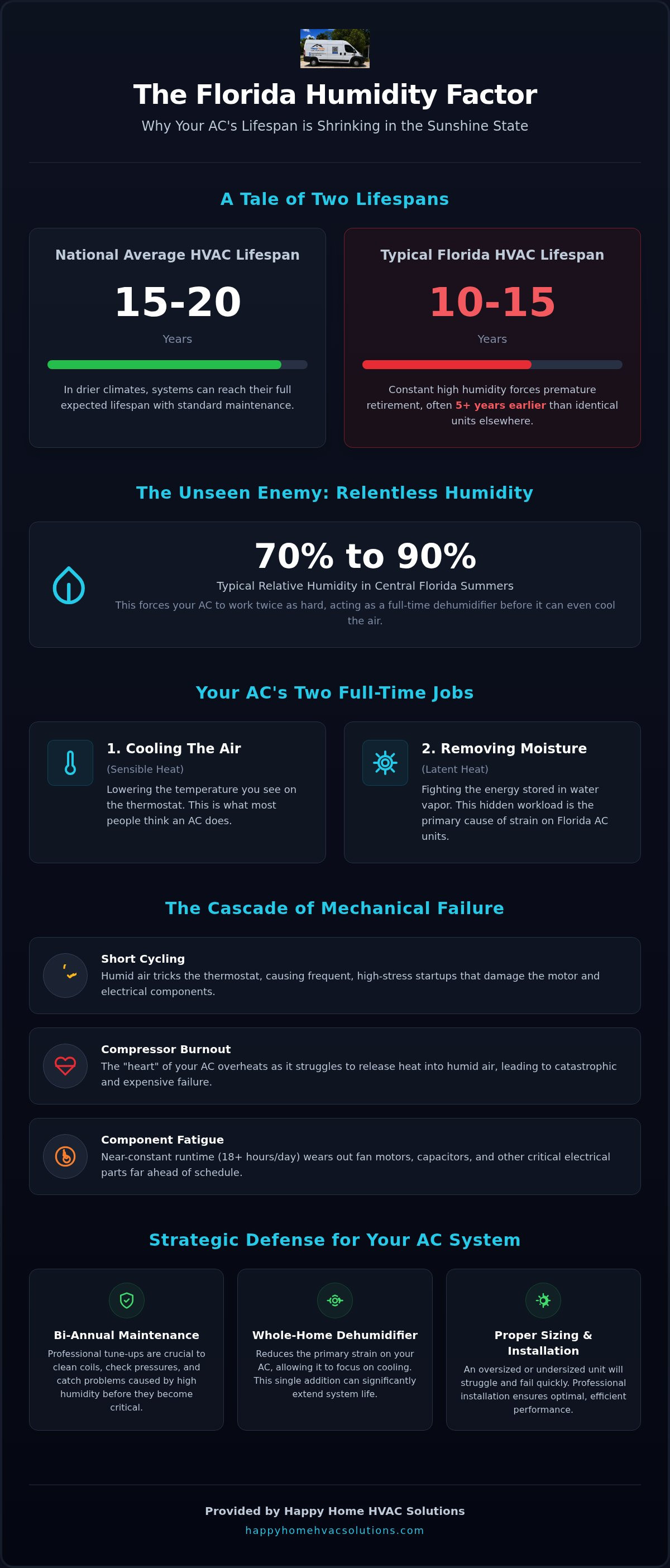
Central Florida summers are famously thick. When you step outside in Orlando or Lakeland, the air often feels like a wet blanket. This isn't just an inconvenience for your comfort; it's a massive challenge for your home’s cooling system. Our local relative humidity typically hovers between 70% and 90% during the peak of summer. Because of this, your air conditioner must act as a high-powered dehumidifier before it can even begin to lower the temperature. This dual responsibility is the primary reason why Florida systems face more wear and tear than those in drier climates.
Latent Heat vs. Sensible Heat: Why Moisture Matters
Most homeowners focus on "sensible heat," which is the temperature reading you see on your thermostat. However, "latent heat" is the real enemy in the Sunshine State. Latent heat is the energy stored in the water vapor in your air. To make your home comfortable, your AC must spend a significant amount of energy removing this moisture. The fundamental process of removing heat requires the system to condense that vapor into liquid. Because Florida air is so saturated, your unit often works twice as hard to achieve the same comfort level as a unit in Arizona. This extra workload is a critical element in how Florida humidity affects AC lifespan over time.
The Dehumidification Cycle in Central Florida Homes
Your system's evaporator coil is the front line of this battle. As warm, humid air blows across the cold coil, the moisture pulls out of the air and collects as condensate. This water then travels through a condensate drain line to the outside of your home. While coastal cities might get a break from moving sea breezes, inland areas like Orlando often experience stagnant humidity. Without a consistent breeze to help dissipate the moisture, the air around your home stays heavy; this forces the system into longer cooling cycles just to keep up with the rising moisture levels inside. Ultimately, high humidity forces the compressor and fan motor to run for significantly longer cooling cycles, which accelerates the mechanical aging of your entire system. We often see units that are mechanically sound but simply exhausted from running eighteen hours a day just to manage the local moisture load. Understanding how Florida humidity affects AC lifespan is the first step toward protecting your investment with proper maintenance and specialized care.
Mechanical Fallout: How Moisture Shortens AC Lifespan
Statistics show that while the national average lifespan of a central air system typically ranges from 15 to 20 years, Florida homeowners often face a much shorter window of 8 to 12 years. This disparity highlights exactly how Florida humidity affects AC lifespan. Our systems don't just cool the air; they work relentlessly to squeeze gallons of water from your indoor environment every single hour. This constant demand creates a state of permanent mechanical stress that units in drier climates simply never experience.
One of the most damaging side effects of high moisture is "short cycling." This occurs when your thermostat senses the heavy, humid air and triggers the system to run in quick, inefficient bursts. Every time your AC starts up, it consumes a massive surge of electricity and puts intense pressure on the motor. In a high-humidity environment, these starts and stops happen more frequently, leading to rapid component degradation. Additionally, the combination of extreme heat and moisture can cause over-pressured refrigerant lines, which forces the system to operate at the very edge of its safety limits. If you're noticing your unit struggling to keep up, a professional AC repair assessment can catch these issues before they lead to a total burnout.
Compressor Burnout: The Heart of the Problem
The compressor is essentially the heart of your cooling system, and it's also the most expensive part to replace. When humidity levels are high, the outdoor unit struggles to release heat, creating high head pressure. This pressure acts like a weight on the compressor’s internal valves, eventually leading to a total failure. If you hear loud clicking or see your outdoor unit vibrating excessively, your system is likely struggling with the local moisture load. We often see compressors fail years early because they were forced to work in "overdrive" just to manage the latent heat load of a Central Florida summer.
Fan Motor Fatigue and Electrical Strain
Constant runtime doesn't just hurt the compressor; it exhausts the fan motors and capacitors. In Central Florida, units often run nearly 24/7 just to maintain a baseline of comfort. This non-stop operation dries out bearings and causes electrical capacitors to leak or bulge. Beyond the mechanical wear, persistent dampness can lead to electrical shorts in the outdoor condenser unit. Industry experts at ASHRAE note that high humidity is a primary driver for Corrosion and Mold Growth on sensitive electrical connections. This overworking isn't just a metaphor. It's measurable mechanical wear that slowly eats away at your system's reliability until an expensive replacement becomes the only option.
The Invisible Damage: Corrosion and Mold Growth
While the mechanical strain on your compressor is often reflected in your monthly energy bill, some of the most severe damage happens out of sight. In Central Florida, the constant presence of moisture does more than just make the motor run longer; it triggers chemical and biological reactions that eat away at your system from the inside out. Understanding these hidden threats is essential to grasping how Florida humidity affects AC lifespan, as these issues often lead to total system failure before the mechanical components actually wear out.
Coil Corrosion: The Silent AC Killer
One of the most frustrating issues we see in local homes is formicary corrosion. This occurs when moisture on your copper evaporator coils reacts with trace amounts of organic acids found in common household items like cleaning supplies, hairspray, or even new carpeting. This reaction creates microscopic "pinhole" leaks in the copper tubing. While older units had thick copper walls, modern high-efficiency coils are designed with thinner walls to improve heat transfer. This makes them significantly more vulnerable to these chemical attacks. Once a coil begins to leak refrigerant due to corrosion, the system must work harder to cool your home, leading to a cycle of overheating that eventually kills the compressor. This chemical degradation is a primary reason why a unit that looks perfectly fine on the outside might only last 10 years instead of 15.
Mold and Biological Growth in the Air Handler
The interior of your air handler is dark, cool, and, in Florida, perpetually damp. This creates a perfect environment for bacteria and fungi to thrive. You might have heard of "Dirty Sock Syndrome," which is the common name for the foul, musty odor caused by bacterial buildup on your evaporator coils. Beyond the smell, biological growth poses a real threat to your equipment's longevity. Mold spores and biofilm can physically restrict airflow, forcing the blower motor to pull more electricity and run hotter than intended. Scientific research on the health effects of relative humidity shows that keeping indoor moisture levels below 60% is critical for stopping these colonies from forming. When your AC is already struggling with high humidity, these biological blockages act like a clogged artery, shortening the life of sensitive electrical parts.
Finally, the sheer volume of water pulled from the air can overwhelm your system’s drainage. Orlando’s frequent afternoon thunderstorms and high humidity mean your condensate drain line is working at maximum capacity for months on end. If this line clogs with algae or "sludge," the resulting backup can cause water damage to your home and accelerate rust on the internal metal components. Even the exterior condenser cabinet isn't safe; the combination of humid air and rain causes the metal casing to rust prematurely, which can eventually lead to fan blade imbalances or electrical shorts. Protecting your system from these invisible threats is just as important as managing the mechanical workload.
Lifespan Preservation: Strategies for Central Florida Homeowners
While the local climate presents significant challenges, your air conditioner isn't doomed to a premature breakdown. By implementing a few strategic changes, you can help your unit reach its full potential and avoid the dreaded 8-year replacement cycle. One of the simplest adjustments involves your thermostat settings. Always keep your fan set to "Auto" rather than "On." When the fan runs constantly, it blows air over the wet evaporator coils even when the compressor is off. This actually re-evaporates the moisture back into your living space, forcing the system to work harder during the next cycle. Managing these small details is a vital part of countering how Florida humidity affects AC lifespan.
Investing in a whole-home dehumidifier is another powerful strategy for long-term reliability. These systems work alongside your AC to handle the "latent load" of moisture removal. This allows your primary cooling system to focus almost exclusively on "sensible heat," which significantly reduces mechanical wear on the compressor and fan motors. When the AC doesn't have to struggle with saturated air, it runs shorter, more efficient cycles that keep internal components from overheating.
The Insulation Connection: Sealing Out the Moisture
Your home's "thermal envelope" is your first line of defense against the Florida swamp. If your attic lacks proper protection, extreme heat and humidity can seep through your ceiling and into your living areas. This forces your AC to run nearly non-stop just to maintain a baseline of comfort. Professional attic insulation installation Orlando serves as a critical lifespan-extender for your cooling equipment. By creating a tighter seal, you reduce the volume of humid air the system has to process. A well-insulated home saves the compressor from the constant high-pressure operation that leads to early failure.
Maintenance Tasks That Combat Humidity
Regular professional care is non-negotiable in the Sunshine State. We recommend scheduling bi-annual maintenance to ensure your system is prepared for the peak summer load. These visits allow us to perform specific tasks that prevent humidity-related damage. Key maintenance items include:
- Flushing the condensate drain line: This prevents algae and "sludge" from causing water backups and internal rust.
- Cleaning the evaporator coils: Removing dust prevents the chemical reactions that lead to formicary corrosion.
- Checking refrigerant levels: A system with low refrigerant cannot dehumidify effectively, leading to longer runtimes and higher bills.
Using high-quality air filters also helps maintain proper airflow, which is essential when the air is thick with moisture. If you haven't had your system inspected recently, our team at Happy Home HVAC Solutions offers comprehensive insulation services and maintenance plans designed specifically for our local climate. Don't wait for a breakdown to protect your home's sanctuary.
Professional Protection with Happy Home HVAC Solutions
Central Florida's air is relentless. It never stops trying to find a way into your home and wear down your cooling equipment. At Happy Home HVAC Solutions, we live and work in the same sticky climate you do. We've seen firsthand how Florida humidity affects AC lifespan, and we've built our business around solving that specific problem for our neighbors. As an LG Certified HVAC Contractor, we bring a level of technical precision to every installation that general contractors often overlook. We don't just swap out boxes; we engineer cooling solutions designed to withstand the unique corrosive pressures of our local environment.
Our family-owned approach ensures that you receive neighborly care and transparent advice every time we visit. We act as a protective figure for your home, focusing on honesty and straightforwardness in all our interactions. Whether you need a minor repair or a complete system overhaul, we prioritize your long-term comfort and peace of mind over quick transactions. We're proud to be a dedicated partner in maintaining your home's sanctuary against the heat.
Why Our 12-Year Warranty Matters in Florida
Most standard manufacturer warranties expire just as the real humidity-related issues begin to surface. Because we understand the local environmental strain, we offer up to a 12-year warranty on our installations. This provides homeowners in Orlando and Lake Mary with essential protection against premature component failure. If a compressor or coil fails due to the heavy moisture load, you're covered. This protection isn't just about saving money; it's about the confidence that your system will remain reliable for its entire service life. Investing in a protected system today prevents the stress of an unexpected replacement a few years down the road.
Schedule Your Central Florida AC Tune-Up Today
A "Humidity Health Check" is more than a simple filter change. Our technicians provide a comprehensive evaluation of your system's moisture-handling capabilities. We serve families from Oviedo to Winter Springs, ensuring that every part of the cooling cycle is functioning at peak efficiency. During a maintenance visit, we focus on the details that matter most in our climate:
- Thorough cleaning of evaporator coils to prevent chemical corrosion.
- Clearing condensate drain lines to stop water backups and mold.
- Inspecting electrical components for signs of moisture-induced wear.
- Verifying that your system maintains the correct refrigerant levels for optimal dehumidification.
Don't wait for your system to struggle before taking action. You can Protect your system with expert AC repair in Sanford, FL and ensure your family stays cool and dry regardless of the weather outside. We're ready to help you extend the life of your air conditioner and keep your utility costs under control with professional, reliable service.
Take Control of Your Home’s Climate and Equipment Health
Living in Central Florida means accepting that moisture is a constant presence, but it doesn't have to be a constant threat to your comfort. We've explored the technical details of how Florida humidity affects AC lifespan, from the heavy strain of latent heat to the hidden dangers of formicary corrosion. By focusing on a sealed home envelope and consistent professional maintenance, you can protect your investment and ensure your system runs efficiently for years to come. You don't have to navigate these humid summers alone; having a dedicated local partner makes all the difference in maintaining your peace of mind.
As a family-owned team of LG Certified HVAC Contractors, we specialize in the specific needs of our local community. We stand behind our workmanship with an industry-leading 12-year warranty on many installations, providing a level of security that corporate providers often can't match. Our goal is to restore your home’s sanctuary and keep your cooling costs manageable even during the stickiest months. Schedule your Florida AC Maintenance with Happy Home HVAC Solutions today! We look forward to helping you enjoy a cooler, drier, and more comfortable home all year long.
Frequently Asked Questions
How long does an air conditioner typically last in Florida?
In Florida, a central air conditioning unit typically lasts between 10 and 15 years. This is noticeably shorter than the national average of 15 to 20 years. The constant heat and humidity force systems to run longer and harder, which accelerates mechanical wear. Regular maintenance and high-quality installations can help you reach the upper end of that range, but the local climate remains the biggest factor in equipment longevity.
Does high humidity make my AC run more often?
Yes, high humidity significantly increases your system’s runtime. Your AC must remove moisture from the air before it can effectively lower the temperature. This process, known as managing the latent heat load, requires the unit to run extended cycles. When humidity levels are between 70% and 90%, your system often works twice as hard. This is a major factor in how Florida humidity affects AC lifespan over time.
What is the best thermostat setting for Florida humidity?
Most experts recommend setting your thermostat to 78 degrees when you are home. Crucially, you should keep the fan setting on "Auto" rather than "On." If the fan runs constantly, it can blow moisture back into your home from the damp evaporator coils. This raises indoor humidity and forces the system to restart its cooling and dehumidification cycle more frequently. This leads to unnecessary mechanical strain and higher energy costs.
Can a dehumidifier extend the life of my air conditioner?
Investing in a whole-home dehumidifier can definitely extend your system’s life. By handling the moisture removal independently, the dehumidifier allows your AC to focus solely on cooling the air. This reduces the total workload on the compressor and fan motor. Since the AC doesn't have to run as long to achieve comfort, it experiences less daily wear and tear. This helps you avoid premature component failure and costly replacements.
Why does my AC smell musty when it's humid outside?
A musty smell usually indicates "Dirty Sock Syndrome," which is caused by bacterial and mold growth on your evaporator coils. In high-humidity conditions, the coils stay damp for long periods. This creates a perfect breeding ground for microorganisms. These biological colonies don't just smell bad; they also restrict airflow. This forces your blower motor to pull more electricity and run hotter, which can lead to electrical failure and a shorter overall lifespan.
How often should I have my AC serviced in Central Florida?
You should have your AC serviced at least twice a year in Central Florida. Our demanding climate means your system works year-round. Bi-annual check-ups are essential for catching small issues like drain clogs or minor refrigerant leaks before they become emergencies. During these visits, we clean the coils and check electrical components to ensure everything is operating efficiently. This proactive care is the best way to protect your unit from moisture damage.
Will new attic insulation really help my AC last longer?
Quality attic insulation acts as a primary barrier against the Florida swamp. By sealing out extreme heat and humid air, insulation reduces the total cooling load on your air conditioner. When your home stays cooler and drier naturally, the AC doesn't have to cycle as often. This reduction in total runtime directly correlates to a longer life for your compressor. It also means fewer expensive repairs and lower monthly utility bills.
What are the signs that humidity is damaging my AC unit?
Common signs include a persistent clammy feeling indoors, ice forming on the evaporator coils, or visible rust on the outdoor condenser cabinet. You might also notice your system "short cycling" or running nearly 24/7 without reaching the set temperature. These symptoms suggest that the moisture load is overwhelming your equipment. Understanding how Florida humidity affects AC lifespan helps you recognize these red flags early. This allows for professional intervention before a total system breakdown.


