

When rooms stay hot during an Orlando summer, the cause may be more than an air-conditioning problem. Uneven comfort can relate to attic insulation, air leaks, ductwork, or HVAC performance. If you’re researching attic insulation installation Orlando, start by understanding the attic as a whole rather than assuming that adding more insulation is the answer.
Before investing in an upgrade, it helps to understand what is already in place and where heat or air may be moving. A well-planned project considers insulation coverage and condition, possible air leaks, and how the attic and HVAC system work together. The right scope depends on your home, not a one-size-fits-all recommendation.
This guide explains how attic insulation can affect comfort and cooling demand in Central Florida, what assessment and installation involve, and how to compare general options. It also covers why air sealing and attic conditions matter, so you can make a more informed decision about an upgrade for your home.
Key Takeaways
- Attic insulation installation Orlando homeowners consider can help manage heat flow, but insulation itself doesn’t cool a home.
- Insulation, air leakage, and ventilation affect attic performance in different ways.
- Compare broad insulation categories, keeping in mind that the right fit depends on the attic and project plan.
- An installation project can include assessing existing conditions, planning the work, and reviewing the completed installation.
- A locally grounded insulation project can support home comfort without promising a specific energy-bill reduction.
Why attic insulation installation matters in Orlando homes
During an Orlando summer, a hot attic can contribute to heat moving into the rooms below. That can make upstairs spaces harder to keep comfortable and leave the cooling system working against ongoing heat gain. Attic insulation can slow that transfer, but it isn’t a cooling device and can’t correct every comfort problem on its own. The value of attic insulation installation Orlando homeowners choose depends on existing attic conditions, air leakage, and the home’s overall needs.
How Central Florida heat affects the attic and living space
Sun warms the roof, and that heat can pass into the attic and through the ceiling toward living areas. Insulation slows heat flow, which may help rooms below feel more consistent during a long cooling season. It supports comfort, but it doesn’t replace a properly functioning HVAC system or resolve a performance issue.
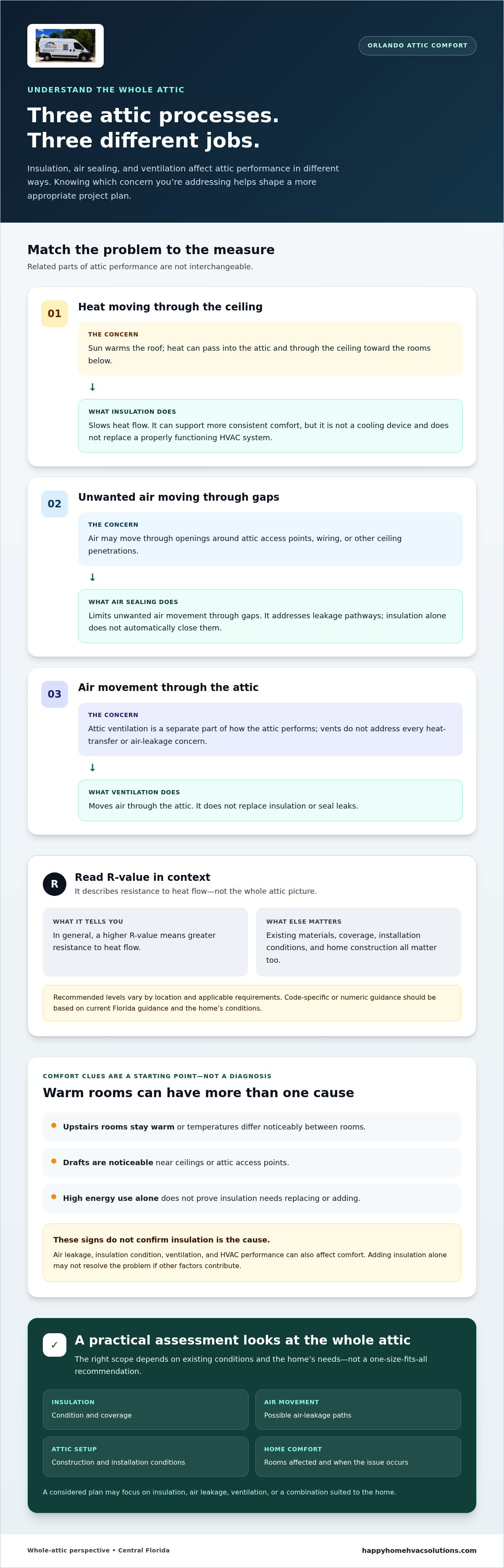
Insulation resists heat flow; air sealing limits unwanted air movement through gaps; ventilation moves air through the attic. These measures address related but different concerns. A general overview of Insulation explains the basic principles and common categories. In a home, the appropriate approach depends on how the attic is built and what it needs.
Signs an Orlando home may need an attic assessment
Upstairs rooms that stay warm, noticeable temperature differences between rooms, or drafts near ceilings and attic access points can be reasons to take a closer look. These signs don’t confirm that insulation is the cause. Air leakage, insulation condition, and HVAC performance can also affect comfort.
High energy use alone doesn’t prove that insulation needs replacing or adding. Cooling demand can have several contributing factors, so understand what’s happening before settling on a project scope. If symptoms persist or you can’t tell what insulation is already in place, a professional attic assessment can help clarify the next step.
A useful assessment considers more than whether insulation is present. Its condition and coverage, possible air-leakage paths, and the comfort concerns you describe all help shape a practical plan. Before discussing an upgrade, note which rooms feel uncomfortable, when you notice the problem, and anything you know about the attic. This gives the assessment useful context and helps focus the plan on your home’s conditions.
How attic insulation works with air sealing and ventilation
An attic’s comfort performance depends on more than the insulation material. Heat can move through ceilings and roof assemblies, air can pass through gaps, and ventilation moves air through the attic. These processes interact, but they aren’t interchangeable. Knowing the difference helps you consider whether a project should focus on insulation, air leakage, ventilation, or a combination suited to the home.
What R-value means for attic insulation
R-value describes how strongly insulation resists heat flow. In general, a higher R-value means greater resistance, but it doesn’t tell the whole story about attic performance. Existing materials, coverage, installation conditions, and the home’s construction all matter. Recommended levels vary by location and applicable requirements, so code-specific or numeric guidance should be based on current Florida guidance and the home’s conditions.
Insulation, air sealing, and ventilation are not interchangeable
Insulation slows heat transfer; air sealing reduces unwanted air movement through gaps; ventilation moves air through the attic. Each addresses a different part of attic performance. A layer of insulation may slow heat passing through the ceiling, but it won’t automatically close openings around penetrations or correct a ventilation issue.
Air can move through openings around attic access points, wiring, or other ceiling penetrations. Those pathways may allow conditioned air to escape or outdoor air to enter. Air sealing addresses such gaps, while insulation resists heat transfer through the building boundary. Ventilation helps move air through the attic; attic vents don’t replace insulation or seal leaks.
Adding insulation alone may not resolve comfort problems if air leaks, ventilation concerns, or HVAC performance are also contributing. That’s why insulation type and placement should follow an assessment of existing conditions and project needs, rather than a generic recommendation. A considered plan looks at how the attic is assembled, where insulation is already present, and whether other parts of the system may affect the intended result.
For homeowners considering attic insulation installation Orlando, this whole-attic perspective helps set a sensible scope before work begins. Happy Home HVAC Solutions is a family-owned, licensed Central Florida HVAC company offering insulation services. Learn more about attic insulation services.
How to assess attic insulation options and address common concerns
Choosing an insulation approach isn’t simply a matter of picking a material with a high R-value or adding more depth. Attic access, layout, existing insulation, and project goals all shape what may be appropriate. A professional assessment helps identify the conditions that matter before you settle on a scope.
Which attic insulation approach may suit a home?
Common insulation categories include loose-fill materials, preformed batts or rolls, and spray-applied foam. These are general examples, not universal recommendations. Their application depends on the attic’s configuration and how the work fits with existing materials and other parts of the home.
The comparison below is a starting point for understanding the options. It doesn’t replace an assessment of your attic.
| Material category | Typical application | Factors for professional assessment |
|---|---|---|
| Loose-fill insulation | Spread across attic floor areas, including around some irregular spaces | Existing insulation, access, coverage, and obstacles in the attic |
| Batts or rolls | Placed in accessible, relatively regular spaces | Fit around framing and obstructions, existing materials, and the area to be covered |
| Spray-applied foam | Applied to selected surfaces as part of a planned insulation approach | Attic design, installation location, moisture considerations, and project scope |
These categories aren’t interchangeable. The right choice depends on the home, and the installation plan should account for existing conditions rather than assume one material works everywhere.
Will attic insulation help if the home still feels hot?
It may help if heat moving through the attic contributes to discomfort, but persistent hot rooms can have other causes. Air leakage, duct conditions, HVAC operation, and direct sun exposure can all affect how a space feels. A high utility bill, by itself, doesn’t identify which factor is responsible.
Adding more insulation doesn’t automatically fix every hot room or high bill. If the underlying concern is a duct issue or air escaping through openings, insulation alone may not resolve it. A whole-attic review can help distinguish conditions that insulation may address from those that point to another part of the home’s comfort system.
For attic insulation installation Orlando homeowners are considering, an assessment supports a project scope tailored to the property, not a blanket recommendation. It can clarify what is already in place, where the attic may need attention, and whether insulation is a reasonable part of the plan.
What to expect from attic insulation installation in Orlando
A successful project starts with understanding the attic, not choosing an installation plan before considering the home’s conditions. Access, existing insulation, attic layout, and the comfort concerns you describe help shape the scope. For attic insulation installation Orlando homeowners can expect a process that moves from assessment and planning to installation and a final review, with details tailored to the property.
What happens during an attic assessment?
The assessment looks at what’s already in place and how the attic relates to the comfort issues you’ve noticed. A professional reviews existing insulation, available attic access, and visible gaps, while listening to your concerns about rooms that feel warm or uneven. These observations help inform a project plan suited to the home rather than a generic recommendation.
Existing conditions matter. The amount and condition of insulation, obstacles in the work area, and the attic layout can affect what the project involves. Bringing these factors into the planning conversation helps define the work before installation begins.
How installation planning protects the home
Before work starts, discuss the project scope and work area so you understand what the planned installation covers. The conversation can account for access, existing conditions, and other details that shape the work. Code-related decisions should follow verified, current Florida requirements rather than assumptions based on general guidance.
The work then follows the agreed scope, with care taken around the home and attic work area. A final review provides an opportunity to discuss the completed work and relevant next steps. The exact process depends on the project: an attic with clear access and straightforward conditions may call for a different scope than one with obstacles or existing material that affects the plan.
Project pricing depends on the individual home and the agreed scope. The assessment helps define the work being considered, while access and existing conditions may influence the project plan. A clear discussion of scope gives you a useful basis for deciding whether the proposed work fits your comfort goals.
For an overview of the service, visit Happy Home HVAC Solutions.
Plan attic insulation installation with a local Orlando team
Attic insulation planning is most useful when it reflects the home in front of you. A room that stays warm, uncertainty about existing insulation, or concerns about cooling demand can all be part of the conversation, but they don’t point to the same solution in every house. An assessment connects those concerns with the attic’s actual conditions and helps shape a project scope around your home.
Why local experience matters for an Orlando attic project
Central Florida’s heat and long cooling seasons make attic conditions an important part of home comfort. Happy Home HVAC Solutions is a family-owned, licensed HVAC company serving Orlando and nearby Central Florida communities, including Oviedo, Winter Springs, Winter Park, and Altamonte Springs. The team brings a local perspective to insulation planning, with a focus on understanding your home’s needs and developing a practical scope rather than making a generic recommendation or promising a particular energy-bill reduction.
Insulation can support a more comfortable home, but results depend on the attic, existing conditions, and how the home’s systems work together. A project-specific plan helps set realistic expectations and gives you a clearer understanding of what the proposed work is intended to address.
Next steps for a more comfortable home
Start by describing what you notice: which rooms feel uncomfortable, whether temperatures vary across the home, and anything you know about the attic’s insulation or access. Those details give the team useful context. Reviewing the attic before choosing an upgrade can help identify whether insulation is a suitable part of the plan and what scope fits the property.
For homeowners considering attic insulation installation Orlando, the aim is to make an informed choice based on the home, rather than assume that adding material will solve every comfort concern. Happy Home HVAC Solutions offers insulation services as part of its work to help Central Florida homeowners create more comfortable living spaces.
Learn about attic insulation installation and the service Happy Home HVAC Solutions provides.
Make a Comfort Plan That Fits Your Home
Attic insulation can support a more comfortable Orlando home, but the best next step isn’t always simply adding more material. Insulation, air leakage, ventilation, and HVAC performance can all affect how rooms feel. A professional assessment helps clarify what’s happening in the attic and shape a project around your home’s existing conditions and comfort concerns.
That property-specific approach is at the heart of attic insulation installation Orlando homeowners can plan with confidence. Happy Home HVAC Solutions is a family-owned, licensed Central Florida HVAC company offering insulation services. The team can help you understand the project scope and how attic insulation may fit into your broader comfort goals, without promising a particular change to your utility bills.
If hot or unevenly cooled rooms have you considering an upgrade, take the next step with a local team. Discuss your attic insulation project with our local team and start planning a more comfortable home with clear, practical guidance.
Frequently Asked Questions
Can attic insulation help keep an Orlando home cooler?
Yes, attic insulation can help slow heat from moving into living spaces, which may support more consistent indoor comfort during Central Florida’s hot, extended cooling season. It doesn’t cool the home by itself or replace a functioning air conditioner. Results depend on the attic’s existing conditions and other factors, such as air leakage and HVAC performance. Homeowners in Orlando, Oviedo, Winter Park, Winter Springs, Altamonte Springs, and nearby communities can consider the attic as part of the overall comfort picture.
How do I know if my attic needs more insulation?
Uneven room temperatures, persistent heat upstairs, or visible gaps in coverage can be reasons to have the attic assessed, but they don’t prove that more insulation is needed. Air leakage and HVAC issues can create similar symptoms. High energy use alone doesn’t identify the cause. If comfort concerns persist or you’re unsure what’s already installed, a professional assessment can help determine whether additional insulation fits your home’s needs.
What is the difference between attic insulation and air sealing?
Attic insulation slows heat transfer through the boundary between the attic and living space. Air sealing reduces unwanted air movement through openings, such as gaps around ceiling penetrations or attic access points. They address different problems and may be considered together, depending on the home. Adding insulation won’t automatically close air leaks, so a review of existing conditions helps clarify which work may support more consistent comfort.
How much does attic insulation installation cost in Orlando?
The cost of attic insulation installation in Orlando depends on the individual project, so a general figure may not reflect your home. Factors such as attic access, existing conditions, and the scope of work influence the plan. A project-specific assessment helps establish what work is appropriate before pricing is determined. Share your comfort concerns and what you know about the attic to help guide that discussion.
How long does attic insulation installation take?
Installation time depends on the home and project scope, so there isn’t one reliable duration for every attic. Access, existing insulation, attic layout, and any conditions that affect the work can influence how the project proceeds. A clear discussion of the planned scope helps set expectations before installation begins. An assessment is the practical first step toward understanding what the work involves for your property.
Should attic insulation be installed before replacing an air conditioner?
There isn’t a universal order that suits every home. Insulation conditions and HVAC performance both affect comfort, so considering them together can help clarify the project plan. If you’re planning an air-conditioner replacement, an attic assessment can show whether insulation should be part of the broader conversation. The right sequence depends on the home’s current conditions and the work being considered, whether you’re in Orlando or a nearby community.
Does attic insulation need to meet Florida Building Code requirements?
Yes, insulation work should follow the applicable current Florida Building Code requirements. The details that apply can depend on the project and the home, so avoid relying on a generic online number as a substitute for current code guidance. For an attic upgrade in Orlando or nearby Central Florida communities, code-related decisions should be based on verified requirements and the specific installation plan.


